Screen-free toys that hold attention, for ages 3 to 14
The screen-free toys that hold attention best have no single finish line: building sets, marble runs, logic puzzles with graded challenges, and crafts that come out differently each time. Magnetic tiles and LEGO for younger children, and GraviTrax and Gravity Maze for older ones, are reliable examples.
Screens are designed to be easy to keep using. A toy has to win attention another way, by being just challenging enough. That means matching the toy to the child: a puzzle that’s too easy is finished in minutes, and one that’s too hard goes back in the box.
Our picks cover ages 3 to 14 and budgets from under £10 to under £100. A few use batteries, but none needs a screen, and several are as good for a grown-up to join in with as for a child to play alone.
The picks
 Ages 4+Steal
Building and LEGO
1. LEGO Classic Medium Creative Brick Box 10696
4.8(35k)
A box of mixed LEGO bricks with no instructions to finish, just endless rebuilds. Suits 4 and up, usually under £25, and it all packs back into the storage box.
- Open-ended bricks for building anything, not just one model
- Eyes bring creatures and characters to life
- The storage box makes tidying up less of a battle
~£20See it → Ages 3–8Fan fave
Building and LEGO
2. PicassoTiles 100-Piece Magnetic Tiles
4.8(35k)
Clear magnetic tiles that click into walls, towers and castles, with no right answer. Easy for 3-year-olds and still used by older siblings, for 3 to 8.
- 100 pieces is enough for tall towers and big castles
- See-through tiles look lovely in sunlight
- Open-ended play, from toddler stacks to complex shapes
~£34See it → Ages 8+Steal
STEM and science
3. Ravensburger GraviTrax Starter Set
4.8(2.2k)
Design a marble run, test it, fix it, try again. Expandable physics play for 8 and up that keeps going for years, under £100.
- Endless layouts, so no two runs need be the same
- Expansion packs let it grow over birthdays and Christmases
- Explores physics ideas through play
~£35See it → Ages 8+Steal
STEM and science
4. ThinkFun Gravity Maze
4.6(2.7k)
A marble logic puzzle with challenge cards from easy to expert. Perfect for 8 and up who like beating their own best, usually under £25.
- Combines logic puzzles with building
- Challenges move from easy to expert
- Solo play suits independent tinkerers
~£16See it → Ages 6+Steal
Puzzles and brain teasers
5. The Genius Square
4.8(7.8k)
Roll the dice, place the blockers, then race to fit your shapes in the grid. A new puzzle every roll, solo or head-to-head, for 6 and up.
- A new puzzle every roll, so it never runs out
- Play head-to-head, or solo against the clock
- Quick rounds that fit into a few spare minutes
~£14See it →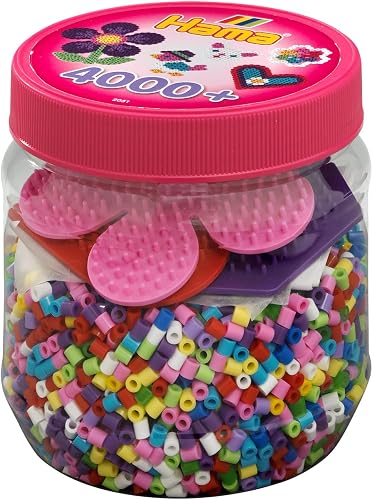 Ages 5–10
Arts and crafts
6. Hama Beads Tub, 4,000 Beads and 3 Pegboards
4.7(6.3k)
Thousands of beads and three pegboards for pictures that a grown-up irons into keepsakes. Absorbing for 5 to 10, and the results actually get kept.
- Pegboards make it easy to copy simple pictures or invent your own
- Finished designs become coasters, decorations and little gifts
- The tub keeps thousands of beads under control
~£14See it →- Ages 6–10
Puzzles and brain teasers
7. Ravensburger Enchanted Forest 100 XXL Jigsaw
4.8(1.1k)
A 100-piece jigsaw with extra-large pieces that are easy to handle. A satisfying afternoon project for 6 to 10, and one to do together.
- XXL pieces are easier to grip and harder to lose
- 100 pieces is a real challenge without being a slog
- A calm, screen-free activity for rainy afternoons
~£14See it →  Ages 3–7Steal
Board and card games
8. Orchard Toys Shopping List Game
4.8(10k)
A memory and matching game where children fill a shopping trolley. Quick, no reading, and a great first family game for 3 to 7.
- Everyday shopping pictures make it easy for little ones to join in
- Builds memory and matching skills while they play
- Plays with 2 to 4, so it works for siblings and grandparents
~£6.99See it → Ages 6+Fan fave
Board and card games
9. Dobble
4.8(39k)
Dobble is a speed-matching card game in a small tin, so it comes everywhere. Quick rounds for 6 and up, and children genuinely beat adults.
- Several mini-games in one tin, from fast to frantic
- Small round tin that slips into a bag for holidays and cafés
- Kids can genuinely beat adults, which they love
~£6.59See it → Ages 3–7
STEM and science
10. Learning Resources Design & Drill Bolt-It Bucket
4.5(3.3k)
A toy drill, colourful bolts and a pattern guide in a bucket with a bolt-board lid.
- The lid doubles as the bolt board, so it all packs away
- Pattern guide builds colour and shape matching
- Portable for trips to grandparents’ houses
~£30See it → Ages 2–8Steal
Arts and crafts
11. Play-Doh Rainbow 8-Pack
4.7(9.8k)
Eight tubs of Play-Doh for squishing, rolling and making a mess of the kitchen table. Classic screen-free play for 2 to 8, usually under £10.
- Eight colours to mix, model and squash
- Tubs split easily between party bags
- Screen-free play that rescues any rainy afternoon
~£3.99See it → Ages 8+Steal
Puzzles and brain teasers
12. Rubik’s Cube 3x3
4.7(15k)
The original 3x3 cube, usually under £10. Some children give up in a minute and others spend years learning a method to solve it, for 8 and up.
- A classic that parents can have a go at and help teach
- Plenty of free beginner guides online for learning step by step
- Pocket-sized, screen-free challenge for car journeys
~£7.50See it → Ages 5–9
Arts and crafts
13. Galt First Sewing Kit
4.6(9.5k)
Simple first sewing projects that end with something a child has made themselves. Quiet, absorbing play for 5 to 9; sit with them for the first one.
- A proper first step into sewing for five-year-olds and up
- Quiet, absorbing activity for winter afternoons
- Finished pieces make proud little gifts for grandparents
~£12See it → Ages 8+Fan fave
Board and card games
14. Azul
4.8(16k)
Draft colourful tiles and build a mosaic, with real strategy behind quick rules. A family game for 8 and up that gets everyone off their phones.
- Rules take minutes, but there’s real strategy
- Chunky, colourful tiles look lovely on the table
- Plays 2 to 4, so it works for a couple too
~£26See it →
Buying advice
What makes a toy hold attention
Toys that last tend to have a low floor and a high ceiling: easy to start, hard to finish. Magnetic tiles let a three-year-old build a wall and a six-year-old a castle. Gravity Maze comes with challenges from easy to expert, and The Genius Square sets a new puzzle with every roll, so a child can keep levelling up. GraviTrax and LEGO Classic have no end point at all.
Toys that are finished in one go, like a single model or a one-off craft, can still be great presents, but they won’t fill many rainy Saturdays.
Match the challenge to the child, not just the age. A keen puzzler of seven may love Gravity Maze, which is marked 8+, while a child who gets cross when stuck is often happier with open-ended building, where there’s no wrong answer.
Set them up to succeed
Children are more likely to choose a toy if it’s easy to start. Leave a half-built marble run out, put a jigsaw on a tray where it won’t be tidied away, or set out the Play-Doh before suggesting a session. A corner of the kitchen where things can stay out for a day makes a big difference.
Rotating toys helps too. Put half of them away for a few weeks, then bring them back out; a toy that’s been in the loft feels new again.
Screen-free isn’t always battery-free
Hama Beads need a grown-up with an iron to fuse each finished design. Everything else here works with hands and imagination.
Mix solo toys with shared ones. Gravity Maze and the Rubik’s Cube are good for quiet time, while games like Dobble, Azul and Shopping List get the whole family off their phones, which is often the real goal.
How we picked
We shortlist toys, games and kits with strong Amazon reviews, check they’re sold on Amazon UK and suit the age on the box, and favour toys with depth: open-ended building, challenges that get harder, or crafts that come out different each time.
Questions people ask
What are good screen-free toys for a 6 year old?
At six, look for toys with challenges that grow: LEGO Classic bricks, magnetic tiles, a 100-piece XXL jigsaw and quick logic puzzles like The Genius Square all suit. Family games like Orchard Toys Shopping List or Dobble give a sociable alternative to a tablet. Toys that are finished in one sitting are fine as a treat, but they won’t fill many afternoons.
How do I get my child interested in toys instead of screens?
Make toys easy to start: leave a build or a jigsaw out rather than tidying everything away each night. Join in for the first ten minutes, then step back. Rotate toys so some feel new, and choose toys at the right level, a bit challenging but not frustrating. Expect some grumbling at first; that’s normal, and it often fades once they’re absorbed.
Are electronic toys screen-free?
Some are. A toy can use batteries without having a screen: Lite-Brite lights up and the Hape solar system puzzle has a glowing sun, but neither has a display. If your goal is less screen time, the useful question is whether the child is doing something or watching something. Toys that need hands, planning and a bit of trial and error are what you’re after.
What are good travel toys that don’t need a screen?
Card games like Dobble pack small, a Rubik’s Cube fits in a coat pocket, and the Magna-Tiles microMAGS set is made for building on the go. Avoid anything with lots of loose parts, like LEGO, Hama Beads or Play-Doh, in the car, and save those for the table at the holiday cottage.
Will my child need help to get started?
Some do at the start. GraviTrax and the Galt First Sewing Kit are easier with an adult for the first go, Hama Beads need a grown-up to do the ironing, and family games obviously need players. Others, like Gravity Maze, the Rubik’s Cube and magnetic tiles, are designed for solo play once a child understands the idea. A mix of both gives you quiet time and together time.